
Gum Grafting
Gum Grafting
If your teeth look longer or feel sensitive near the gumline, we can assess the recession and discuss whether grafting would help.
Request a ConsultationWhat happens when gums recede.
Gum grafting is part of periodontal plastic surgery, which addresses the health and appearance of the gums. Recession exposes part of a tooth’s root. You may notice sensitivity, a change in appearance, or an area that is harder to keep comfortable and clean. Gum thickness, inflammation, tooth position, and brushing habits can contribute.
We measure the recession and assess the tissue around each tooth. Some areas can be monitored; others may benefit from grafting. We explain what treatment could achieve for your situation.
Dr. Miles Madison and Dr. Ethan Madison teach gum grafting techniques to other dentists and dental specialists. Together, they co-direct Everyday Soft Tissue Mastery at gIDE, the Global Institute for Dental Education.
Coverage, comfort, and tissue support.
-
Increase tissue thickness
Grafting can strengthen a thin area of gum and prevent further recession. The approach depends on the tissue, tooth position, and your goals.
-
Cover exposed roots
In suitable areas, a graft can improve root coverage and the appearance of your smile. The dentin and cementum exposed at the root are 10 times more susceptible to decay than enamel. Covering exposed roots can help protect these vulnerable surfaces.
-
Address sensitivity
Tissue thickening and root coverage may help with sensitivity. We also discuss treatments that can reduce sensitivity without surgery.
Planning and placing a graft.
- 01
Assess the area
We measure the recession and discuss contributing factors and any changes over time. Photographs or scans may be used to track changes, in addition to measurements.
- 02
Choose an approach
We discuss the technique and whether tissue from your palate or another graft material suits the area.
- 03
Perform the procedure
Local anesthesia keeps the area numb. Fine instruments and magnification help us handle the tissue precisely.
- 04
Support healing
We provide written aftercare instructions and review the area as it heals.
Give the graft time to heal.
Soreness varies with the number of teeth treated, the technique, and whether tissue is taken from your palate. Discuss work and other commitments with us so you can plan time to recover. Most of our patients have very little discomfort after grafting procedures.
You will need to protect the area and adjust eating and cleaning while it heals. Follow your written instructions and check with us before resuming brushing at the graft. The tissue continues to mature over the following months.
Before & after
Treatment results
Before and after photographs from our practice. Treatment and healing vary from person to person.
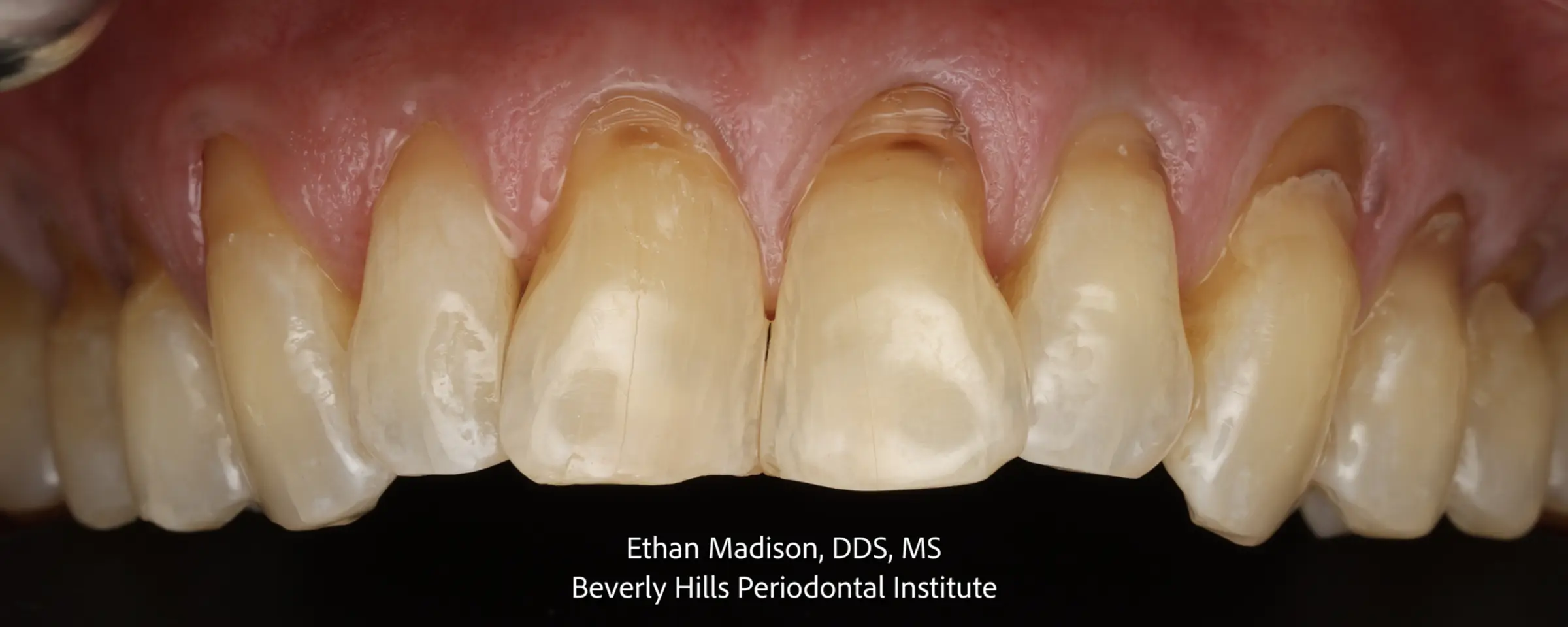
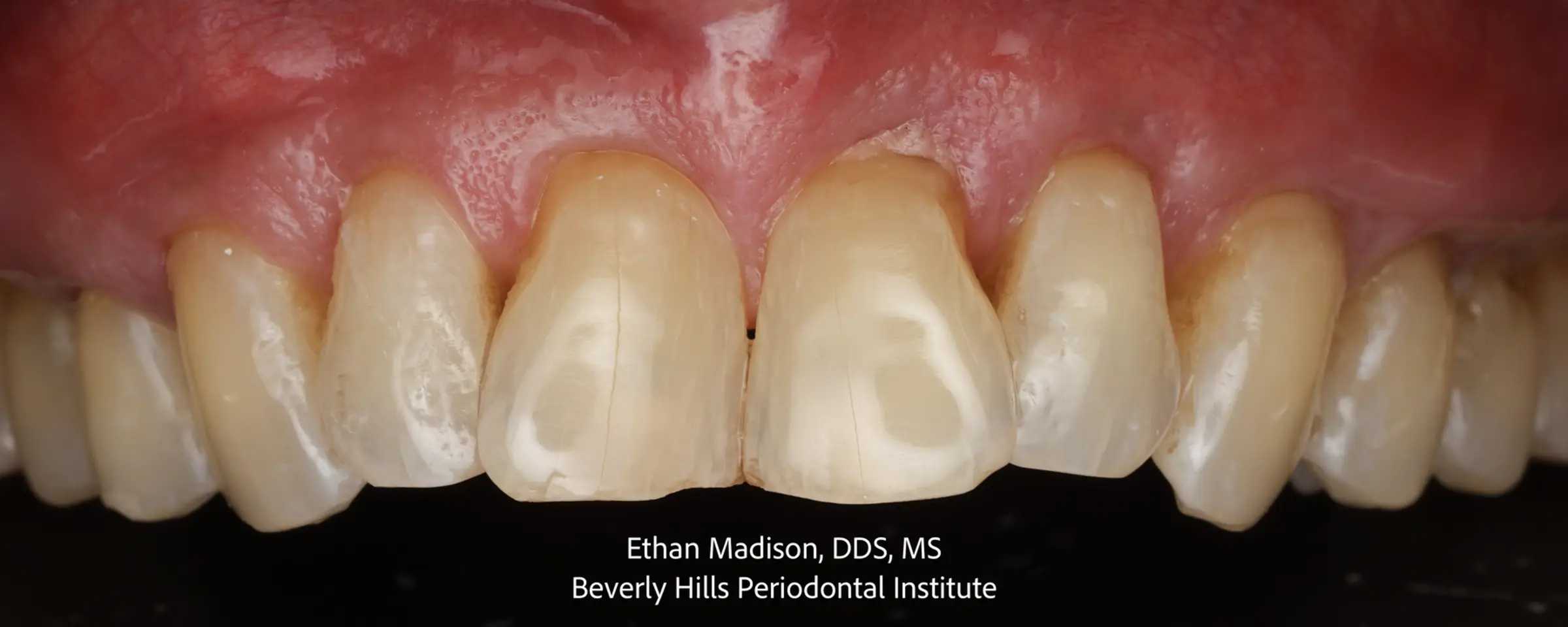
Compare the photographs to see the area before and after treatment.
Gum Grafting FAQ
Questions about gum grafting.
Will the graft look natural?
We plan for a gumline that blends with the surrounding tissue. Color, thickness, and the amount of root coverage vary with the site and technique.
How long does a graft last?
Results can be stable long term. We assess the factors contributing to recession and discuss home care and follow-up to help maintain the area.
Does all recession need surgery?
No. Stable areas may be monitored, and sensitivity can sometimes be managed with other treatments. We consider your symptoms, tissue thickness, and evidence of progression.
What if I want to avoid tissue from my palate?
Donor material may be suitable for some cases. We explain its benefits and limitations compared with using your own tissue.
Can you treat the gap in the gum between two teeth?
The small triangle of gum is called the papilla. Treatment is less predictable in this area and depends partly on the bone and tooth contact. Surgical, orthodontic, or restorative options may be considered.
Do both doctors perform gum grafting?
Yes. Both doctors treat recession and teach soft-tissue surgery together through gIDE. They can discuss the approach suited to your case.
Related treatments
- Crown Lengthening Adjusting the gumline to prepare a tooth for a crown or address how much gum shows in your smile. Read more
- Frenectomy Assessment and treatment of a lip or tongue attachment that affects function or the surrounding gums. Read more
- Sedation & Anesthesia Local anesthesia and sedation options to help you feel comfortable during treatment. Read more
Consultation
Have your gums assessed.
We will measure the recession and tell you whether we recommend a graft or continued monitoring.